Picture two sellers on the same street in downtown Lebanon, each with a nearly identical rowhome, each planning to list within the month. The first orders a radon test the week she calls her agent, months before a For Sale sign goes up. The second waits, figuring the buyer's inspector will handle all of that once there's an offer on the table. Same house, same block, same buyer pool. What happens next is not the same at all.
That difference has almost nothing to do with the house and everything to do with Pennsylvania's disclosure law, which does not require anyone to test for radon. It only requires you to disclose what you already know. That one distinction is the piece of this process most Lebanon sellers never get walked through, and it changes when problems get found, who has the leverage when they are, and what they end up costing.
The Disclosure Duty Is Triggered by Knowledge, Not by Testing
Pennsylvania's Real Estate Seller Disclosure Law, found at 68 Pa.C.S. §§7301 through 7315, requires most sellers of one to four unit residential properties to complete a written property disclosure statement covering known material defects across roughly seventeen categories, including environmental hazards like radon. That statement has to reach the buyer before the agreement of sale is signed, not after. If a seller later turns out to have known about a defect and didn't put it on the form, a buyer has up to two years after closing to bring a claim.
Here is the part that catches people off guard: the law never says you have to test for anything. It says you have to disclose what you know. A seller who has never tested technically knows nothing to report on that line. A seller who tested last year and got a bad number now has a legal duty that didn't exist before the test. In a narrow, technical sense, not testing is the lower-risk move on paper.
In practice, it's the opposite. Skipping the test doesn't make the radon go away. It just moves the discovery from a moment you control, before you've priced the house or signed anything, to a moment you don't control, in the middle of a signed contract, usually ordered by the buyer's own inspector during their contingency window.
Why Lebanon County Tests the Way It Does
Lebanon County carries the EPA's Zone 1 classification, its highest risk tier, meaning the predicted average indoor radon screening level runs above 4.0 pCi/L, the level at which the EPA recommends action. That's not a quirk of one neighborhood. It traces back to the limestone and shale bedrock common across south-central Pennsylvania, paired with how many local homes are built over basement foundations where soil gas has a direct path indoors. As of early 2026, homes tested in the Lebanon area were averaging around 5.0 pCi/L, which sits above that action threshold rather than hovering near it.
That average matters for anyone weighing whether their own home is likely to test clean. In a Zone 1 county, "probably fine" is a worse bet than it would be almost anywhere else in the state.
The Hidden Cost Isn't the Fan in the Basement
Radon mitigation itself is not the expensive part of this story. As of early 2026, the average cost to mitigate a home in Lebanon County ran about $1,413, typically falling between $1,010 and $1,817 depending on foundation type and how the venting pipe has to be routed.
| What it covers | Typical range |
|---|---|
| Standard sub-slab depressurization system, basement foundation | $1,010 to $1,817 |
| Average cost across Lebanon County homes | around $1,413 |
That's a manageable number, and it's one a seller can plan around, budget for, and even use as a selling point once the work is documented. What isn't manageable in the same way is what happens when that same number surfaces two weeks into a signed contract, after the buyer has already locked a rate, ordered an appraisal, and started picturing moving day. At that point, the conversation isn't "here's a documented, mitigated system." It's a renegotiation, under a closing deadline, with a buyer who suddenly has new leverage and a seller who has none.
Testing before listing turns a possible mid-contract crisis into a line item you controlled from the start.
What This Looks Like in Lebanon's Older Housing Stock
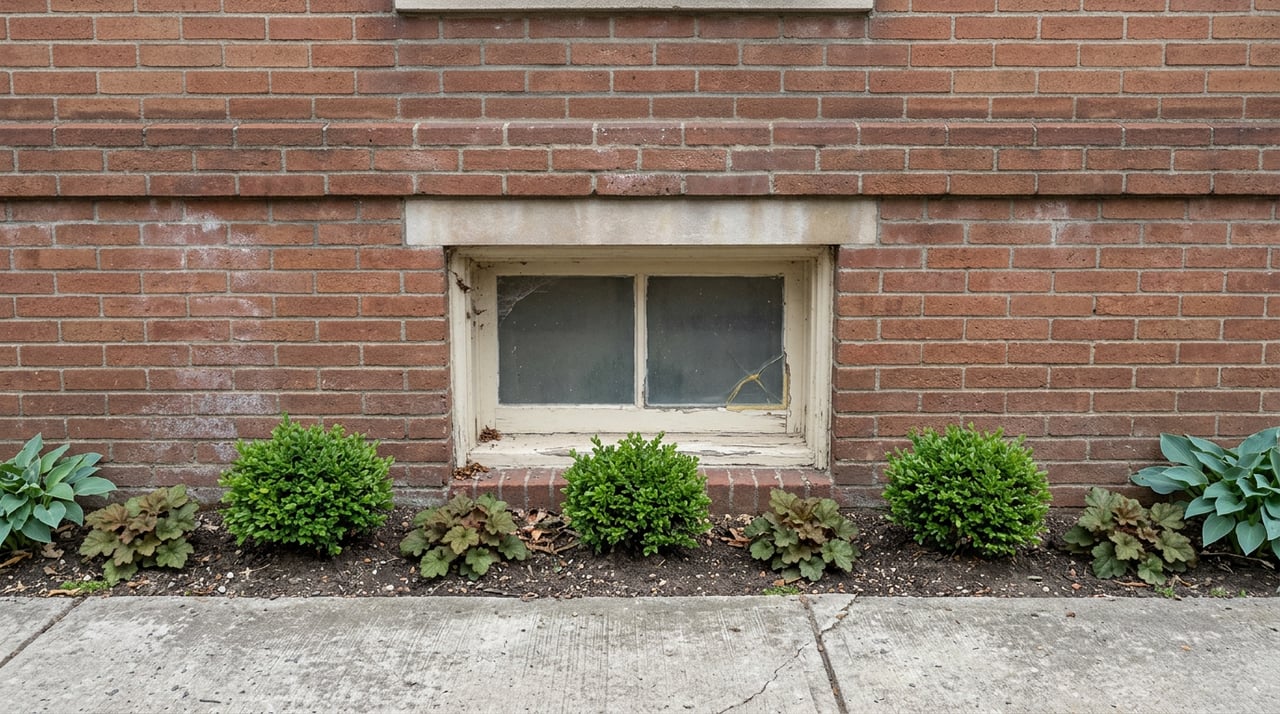
Downtown Lebanon's charm comes largely from its late nineteenth and early twentieth century rowhomes, the kind of walkable, historic blocks that draw buyers who want character over a subdivision. The tradeoff is that homes from that era across Pennsylvania were commonly wired and plumbed with materials inspectors still flag today: original wiring generations that predate modern grounding standards, and supply piping types that have since been superseded by copper. None of that makes a home unsellable. It does mean a seller in one of these blocks should expect an inspector's report to include some age-related notes, and should factor that into how the disclosure form gets filled out.
Pennsylvania also presumes lead paint in any home built before 1978, which covers most of downtown Lebanon's rowhome inventory. Sellers aren't required to test for it, but the same logic applies as with radon: known information has to go on the form, and untested homes carry an assumption buyers and their agents already know to look for.
A Practical Sequence for Sellers Who Want to Control the Clock
- Order a radon test before you list, not after you're under contract. A short-term test typically takes a few days to complete.
- If the result comes back above 4.0 pCi/L, get a mitigation system installed and keep the invoice and any post-installation retest.
- Complete the Seller's Property Disclosure Statement accurately, noting the test result, the mitigation date, and the contractor, if applicable.
- Hold onto every receipt. Documentation is what turns a defect into a solved problem in a buyer's eyes, and it's the paper trail that protects you if a question ever comes up after closing.
Local Inspectors See This Pattern Every Week
This isn't a hypothetical drawn from a statute. HouseMaster, which serves both Harrisburg and Lebanon, notes that its inspectors work in this market specifically because they understand how common radon and termite findings are in local homes. Enviroquest, C&S Home Inspections, The Radon Bros, and M. Webster Construction, a National Radon Defense dealer, all operate actively in Lebanon zip codes for exactly this reason. When several independent local providers are staffed and pricing specifically around radon testing and mitigation in this county, that's a strong signal the pattern is real, not a sales pitch.
A Few Questions Sellers Ask
Does Pennsylvania require every home to be tested for radon before it's sold? No. The law requires disclosure of known material defects, not testing. A seller who has never tested has nothing to report on that line, which is exactly why testing early, while you still control the timeline, is the stronger move.
How long can a buyer come back after closing if something wasn't disclosed? Up to two years under the Real Estate Seller Disclosure Law, provided the buyer can show the seller actually knew about the defect and didn't report it.
Is Lebanon's radon risk different from Palmyra, Cornwall, or the rest of the county? No. The Zone 1 classification applies across Lebanon County, driven by the same regional bedrock and the same prevalence of basement foundations, so the same testing logic holds anywhere in the county.
If you're weighing when to list a Lebanon home and want to walk through what a pre-listing test, an older home's inspection notes, or the disclosure form actually means for your specific property, that's exactly the kind of conversation worth having before the sign goes in the yard, not after an offer is signed. Sarah Lingle works with Lebanon County sellers on this timing decision regularly and is glad to talk through yours. Schedule a Free Consultation to get ahead of it.